
Cassia Bark Roll vs Ceylon Cinnamon vs Indian Cinnamon: Understanding the Real Difference
Cinnamon is one of the world’s oldest and most cherished spices, valued for its warm aroma, sweet flavour, and remarkable health benefits. However, not all cinnamon is the same. If you’ve ever wondered about the difference between Cassia Bark Roll, Ceylon Cinnamon, and Indian Cinnamon (Nadan Patta), you’re not alone.
Although these spices may look similar, they vary significantly in flavour, texture, appearance, coumarin content, and culinary uses. Understanding these differences will help you choose the right cinnamon for your recipes and health needs.
What is Cassia Bark Roll
Cassia Bark Roll is the most commonly traded type of cinnamon worldwide. It comes from the Cinnamomum cassia tree, primarily grown in China, Indonesia, and Vietnam.
The bark is harvested in thick layers and naturally curls into a single, hard roll.
Characteristics of Cassia Bark Roll
- Thick and hard bark
- Dark reddish-brown colour
- Strong, spicy aroma
- Bold and slightly pungent flavour
- High essential oil content
- Long shelf life
Because of its intense flavour, Cassia is widely used in spice blends, curries, bakery products, masalas, and commercial food processing.
What is Ceylon Cinnamon?
Often called True Cinnamon, Ceylon Cinnamon comes from the Cinnamomum verum tree, mainly cultivated in Sri Lanka.
Unlike Cassia, Ceylon Cinnamon is made from very thin layers of inner bark that are carefully rolled together, creating multiple delicate layers.
Characteristics of Ceylon Cinnamon
- Thin, paper-like layers
- Light tan or golden-brown colour
- Mild, sweet aroma
- Delicate flavour with citrus notes
- Soft texture that breaks easily
- Naturally low in coumarin
Because of its refined flavour, Ceylon Cinnamon is preferred for desserts, teas, coffees, pastries, and gourmet cooking.
What is Indian Cinnamon (Nadan Patta)?
Indian Cinnamon, commonly known as Nadan Patta, is harvested from Cinnamomum tamala and related native cinnamon species found in the Western Ghats of Kerala and other parts of India.
It has been used for centuries in Indian households and Ayurveda.
Unlike imported Cassia or Ceylon Cinnamon, Indian Cinnamon has a unique aroma that combines sweet, woody, and earthy notes, making it an essential ingredient in traditional Indian cuisine.
Characteristics of Indian Cinnamon
- Medium-thick bark
- Rich brown colour
- Warm, woody aroma
- Balanced sweetness with mild spice
- Excellent for Indian cooking
- Traditionally used in Ayurvedic preparations
Indian Cinnamon offers an authentic regional flavour that perfectly complements biryanis, curries, masalas, chai, and slow-cooked dishes.
Cassia Bark Roll vs Ceylon Cinnamon vs Indian Cinnamon
| Feature | Cassia Bark Roll | Ceylon Cinnamon | Indian Cinnamon |
|---|---|---|---|
| Botanical Name | Cinnamomum cassia | Cinnamomum verum | Native Indian cinnamon species |
| Origin | China, Indonesia, Vietnam | Sri Lanka | India (especially Kerala) |
| Colour | Dark reddish-brown | Light golden brown | Medium brown |
| Bark Thickness | Thick | Very thin | Medium |
| Texture | Hard | Soft and delicate | Firm yet easy to break |
| Flavour | Strong and spicy | Mild and sweet | Warm and balanced |
| Aroma | Intense | Elegant and delicate | Rich and earthy |
| Coumarin Content | High | Very Low | Moderate to Low |
| Best For | Curries, spice blends, commercial cooking | Desserts, tea, coffee, baking | Indian cuisine, biryani, chai, masalas |
Which Cinnamon is Healthier?
One of the biggest differences lies in coumarin, a naturally occurring compound found in cinnamon.
Ceylon Cinnamon
- Very low coumarin
- Suitable for regular consumption
- Preferred for wellness-focused diets
Cassia Bark Roll
- Contains significantly higher coumarin
- Safe in culinary quantities
- Excessive long-term consumption is generally not recommended
Indian Cinnamon
Indian Cinnamon typically contains moderate levels of coumarin depending on the species, while offering the rich flavour profile traditionally associated with Indian cooking.
Which Cinnamon is Better for Cooking?
The answer depends on what you’re preparing.
Choose Cassia Bark Roll if you want:
- Strong flavour
- Rich curries
- Garam masala
- Pickles
- Commercial spice blends
Choose Ceylon Cinnamon if you want:
- Herbal teas
- Coffee
- Cakes
- Cookies
- Desserts
- Premium baking
Choose Indian Cinnamon if you want:
- Authentic Indian recipes
- Biryani
- Pulao
- Kerala curries
- Chai
- Slow-cooked gravies
- Traditional spice blends
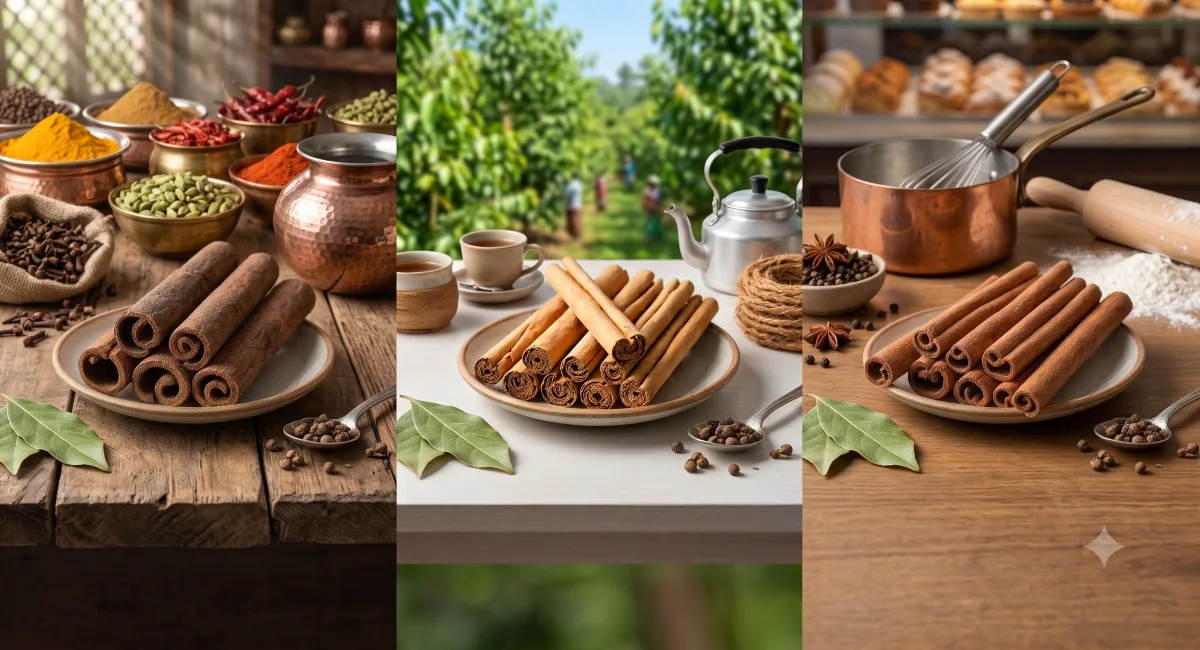
Appearance Guide
You can often identify cinnamon simply by looking at it.
Cassia Bark Roll
- Thick single-layer roll
- Rough outer surface
- Difficult to break by hand
Ceylon Cinnamon
- Multiple thin layers
- Looks like a rolled cigar
- Very light and fragile
Indian Cinnamon
- Medium-thick bark
- Slightly rough texture
- Naturally curled with a woody appearance
Why Quality Matters
Premium cinnamon retains more of its natural essential oils, resulting in better aroma, flavour, and freshness. Whether you choose Cassia, Ceylon, or Indian Cinnamon, always look for:
- Single-origin sourcing
- Naturally dried bark
- No artificial colours
- No added preservatives
- Fresh harvests
- Proper storage and packaging
Frequently Asked Questions (FAQs)
Is Cassia Bark Roll real cinnamon?
Yes. Cassia belongs to the cinnamon family and is the most widely used variety globally. It differs from Ceylon Cinnamon in flavour, texture, and coumarin content.
Why is Ceylon Cinnamon more expensive?
Ceylon Cinnamon is labour-intensive to produce. Skilled workers carefully peel and roll the delicate inner bark, making it rarer and more costly than Cassia.
Is Indian Cinnamon the same as Ceylon Cinnamon?
No. Indian Cinnamon has its own distinctive flavour profile and is traditionally used in Indian cuisine. It is different from both Ceylon Cinnamon and Cassia.
Which cinnamon is best for biryani?
Indian Cinnamon and Cassia Bark Roll are both excellent choices for biryani because they provide a richer, more robust aroma that complements savoury dishes.
Which cinnamon is best for tea?
Ceylon Cinnamon is often preferred for tea due to its sweet, delicate flavour, though Indian Cinnamon also creates a wonderfully aromatic masala chai.
Final Thoughts
While all three varieties belong to the cinnamon family, each offers unique characteristics.
- Cassia Bark Roll delivers bold flavour and is ideal for hearty cooking and spice blends.
- Ceylon Cinnamon is prized for its delicate sweetness, low coumarin content, and premium quality.
- Indian Cinnamon (Nadan Patta) brings the authentic warmth and depth that define traditional Indian cuisine.
Choosing the right cinnamon depends on your taste preferences, intended use, and desired flavour profile. By understanding these differences, you can select the perfect cinnamon to elevate every recipe.
At Erel Spices, we are committed to bringing you premium-quality spices sourced from trusted growing regions and carefully selected for their freshness, purity, and authentic flavour. Whether you’re looking for Premium quality Ceylon Cinnamon, robust Cassia Bark Roll, aromatic Indian Cinnamon (Nadan Patta), or other premium spices from Kerala and across India, every product is chosen to deliver exceptional quality from farm to table. Visit the Erel Spices Experience Centre in Thekkady to discover the fascinating world of spices through expert-guided experiences, or shop online to enjoy nature’s finest flavours delivered to your doorstep.