
One Fruit, Two Spices: The Surprising Truth About Nutmeg and Mace
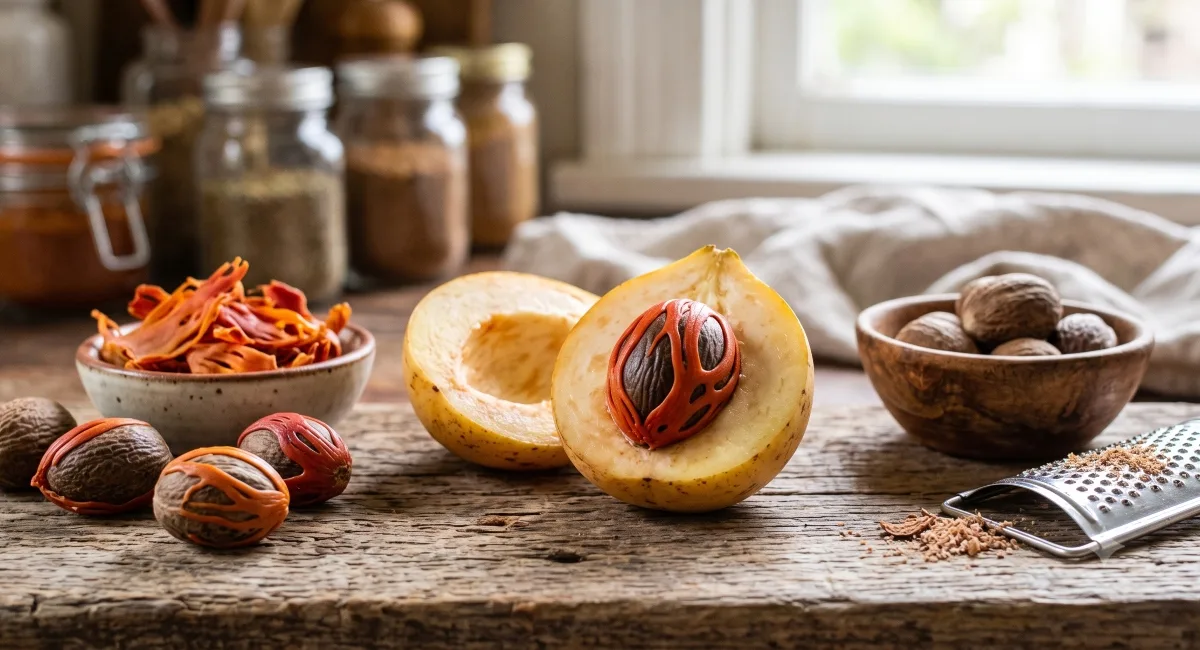
Ask most people what mace is, and you’ll get a blank stare, yet almost everyone has cooked with both. Here’s the twist: they’re not two different spices grown on two different plants. They come from the exact same fruit. Crack open a ripe nutmeg fruit, and you’ll find a hard brown seed wrapped in a bright red, lace-like covering. Dry the seed, and you get nutmeg. Dry that red lace, and you get mace. One fruit, two spices, two completely different flavours, and most kitchens only know half the story.
Where Nutmeg and Mace Actually Come From
Both spices come from Myristica fragrans, a tropical evergreen tree native to Indonesia’s Banda Islands and now widely grown across Kerala’s spice belt, including in and around Idukki.
When the fruit ripens, it splits open to reveal:
The seed: the hard kernel inside, which becomes nutmeg once dried and shelled.
The aril: a delicate, web-like red covering around the seed, which becomes mace once carefully peeled off and dried.
Nutmeg vs. Mace: What’s the Actual Difference?
Nutmeg is the inner seed of the fruit, while mace is the outer red aril that surrounds it.
– In terms of flavour, nutmeg has a warm, sweet, slightly nutty taste, whereas mace offers a sharper, more delicate flavour with a hint of citrus.
– Nutmeg is best used in baked goods, curries, eggnog, and hot beverages, while mace shines in delicate sauces, rice dishes, seafood, and biryanis.
– Both spices are sold either whole or ground. Nutmeg as a whole seed or powder, and mace as whole “blades” or powder.
– When it comes to potency, nutmeg is quite strong and needs to be used sparingly, while mace is milder and can be used more generously.
They share a family tree, but nutmeg and mace behave very differently in the kitchen.A simple rule chefs use: reach for nutmeg when you want warmth and depth, and reach for mace when you want fragrance without heaviness.
The Health Benefits Behind the Flavour
Beyond taste, both spices have a long history in traditional wellness practices.
– Digestive support: Both nutmeg and mace have traditionally been used to ease bloating and support digestion after heavy meals.
– Anti-inflammatory compounds: Nutmeg contains natural oils believed to have anti-inflammatory properties.
– Sleep and calm: A pinch of nutmeg in warm milk is a well-known traditional remedy for restlessness.
– Rich in antioxidants: Mace, in particular, is valued for compounds that help fight oxidative stress.
As with any potent spice, moderation matters. Nutmeg in large quantities can be toxic, so a pinch is genuinely all you need.
How to Cook With Nutmeg and Mace
– Nutmeg stands out in creamy dishes. For instance, mashed potatoes, pumpkin soup, and spiced chai. Always grate it fresh; the flavour fades fast once ground.
– Mace is the secret behind restaurant-style biryanis and pulao. Its aroma infuses rice without overpowering it. It also pairs beautifully with fish and creamy curries.
– Together, they’re a backbone of garam masala and many festive Kerala spice blends, which is why both often live side by side.
Why Fresh, Whole Nutmeg and Mace Make All the Difference
Pre-ground nutmeg and mace lose their essential oils fast, often within weeks of grinding which is why store-bought powder can taste flat compared to freshly grated whole spice. Whole nutmeg seeds, kept dry and airtight, can retain their aroma for years.
Frequently Asked Questions
- Is mace the same as nutmeg?
No. They come from the same fruit but are different parts of it. Nutmeg is the inner seed, while mace is the red, lace-like covering around that seed. They have distinct flavours and are used differently in cooking.
- Can I substitute nutmeg for mace, or vice versa?
In a pinch, yes, since their flavours overlap slightly. Use about half the amount of nutmeg if substituting for mace, as nutmeg has a stronger, more concentrated flavour.
- How should I store nutmeg and mace to keep them fresh?
Keep whole nutmeg seeds and mace blades in an airtight container away from heat and light. Grate or grind only what you need.
- Is nutmeg safe to use every day?
In small culinary amounts (a pinch or two), yes. Nutmeg becomes toxic in large doses, so it should always be used sparingly, as a spice rather than a supplement.