
Sweet Spices Beyond Baking: The Savoury Side of Cinnamon, Nutmeg and Cardamom
If you grew up outside India, you probably met cinnamon in a cinnamon roll, nutmeg in eggnog and cardamom in a latte. But if you have spent any time in a Kerala kitchen, you know these three are not dessert spices at all. They are the backbone of the state’s most iconic savoury dishes. It is a fitting twist of history too. Kerala’s western ghats are one of the original homelands of cardamom and black pepper, and the old spice coast around Kochi and Kozhikode built centuries of trade on exactly these aromatics; long before anyone thought to put them in a cookie.
In Kerala and across India, more broadly, cinnamon (patta), nutmeg (jathikka) and cardamom (elakka), sit in the same masala dabba as cumin, coriander and black pepper. They are everyday ingredients in biriyani, meat curry and stew and not just seasonal specialities pulled out.
Cinnamon: The Backbone of Kerala’s Meat and Rice Dishes
In Kerala cuisine, cinnamon is rarely used alone. It is part of the whole-spice base that gets tempered in coconut oil before the real cooking even begins.
- Malabar Biriyani: Cinnamon sticks go into the ghee along with cloves and cardamom to build the fragrant base before the rice and meat layer in.
- Kerala-style meat curries: A stick or two simmers alongside the masala, giving the gravy its characteristic warmth.
- Kerala Stew: The Syrian Christian coconut milk stew, often eaten with appam, uses cinnamon as one of its defining whole spices.
- Garam Masala Blends: Kerala’s version leans more heavily on cinnamon, cardamom and cloves than the North Indian mix, which is part of why the region’s food tastes distinct.
How to use
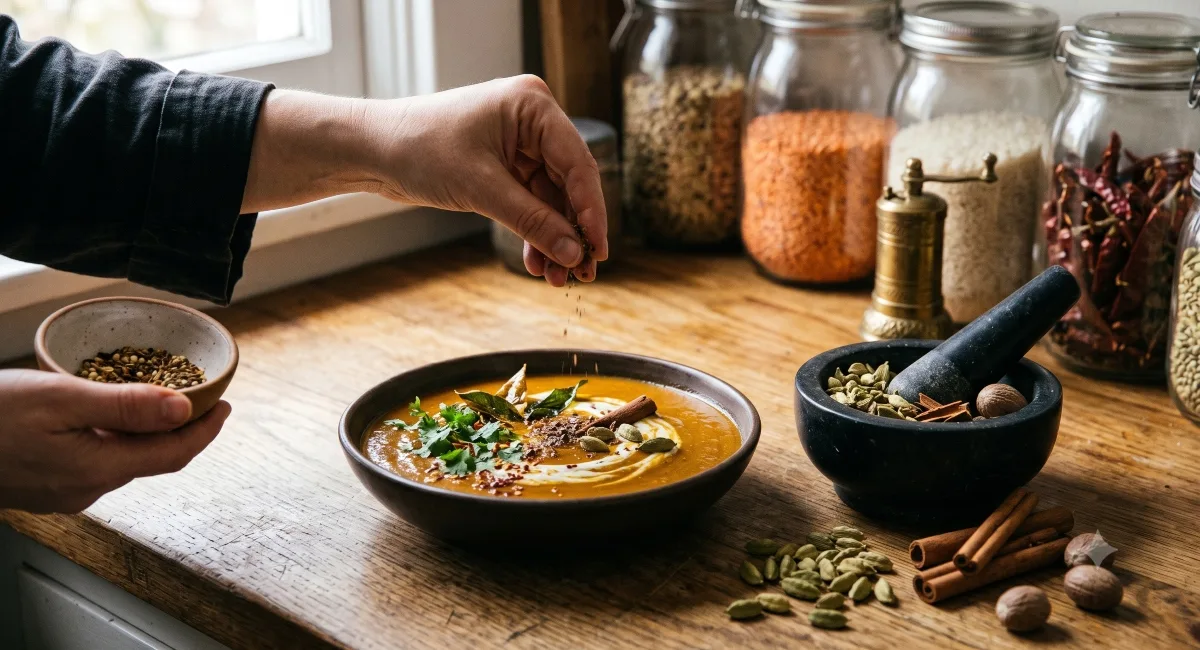
Temper whole cinnamon sticks in hot coconut oil or ghee at the very start of cooking, along with other whole spices, before adding onions. Let it crackle briefly to release its oils. Remove the stick before serving.
Nutmeg: Kerala’s own Backyard Spice
Nutmeg trees grow all over Kerala’s homesteads and the spice shows up in savoury cooking far more than most outsiders realise – including in one of the state’s most famous dishes.
- Malabar Biriyani: A small amount of grated nutmeg is a signature addition, giving the biriyani its rounded, slightly smoky depth.
- Meat and fish curries: A pinch of nutmeg deepens rick, spicy gravies, especially those with coconut.
- Meat Roasts: A small grating add warmth to dry-fried beef or mutton preparations without making them taste sweet.
How to use
Grate fresh nutmeg directly into the dish near the end of cooking. A light dusting is enough as it is potent and can turn bitter if overused. In Kerala kitchens, it is typically measured in pinches and not spoonfuls.
Cardamoms: Kerala’s savoury staple
Cardamom is not just a Kerala spices; it is practically an export legacy of Kerala. The hill town of Kumily in Idukki is still one of the world’s major cardamom trading hubs. In the kitchen, it is used with the same confidence as cumin or coriander.
- Biriyani: Whole green cardamom pods are essential in the tempering, alongside cinnamon and cloves, for both the rice and the meat masala.
- Meat and vegetable curries: Cardamom pods are added to coconut based curries for a floral, slightly citrusy flavour.
- Kerala style pulao and ghee rice: Cardamom pods are bloomed in ghee before the rice goes in.
- Sulaimani and spiced tea: While this leans toward drinks rather than dishes, it shows how deeply cardamom is woven into daily life of Keralites.
How to use it
Lightly crush whole pods with the back of a knife before adding them to hot oil or ghee. This cracks the shell just enough to release the seeds’ oils without scattering them everywhere. Add early, with your otherwise whole spices so that the flavour has time to infuse gradually.
Cooking spices the Kerala way
What makes Kerala cooking distinct is not just which spices it uses, it is how. Almost every non-vegetarian Kerala dish starts the same wat; the whole spices are tempered in hot coconut oil until fragratn, then onions, ginger, garlic and so on. This technique is what turns the “sweet” spices into the foundation of savoury cooking. The spices are not added for sweetness; they are added for warmth and the coconut oil carries the warmth throughout the whole dish.
A few thumb rules
- Blood, whole spices in fat first: Coconut oil or ghee, hot and not smoking, is how Kerala kitchen unlocks cinnamon, cardamom and cloves before anything else goes into the pot.
- Use nutmeg sparingly and late: It is strong. So, a pinch grated nearing the end of cooking is usually enough.
Pair, do not isolate: These spices rarely work alone in Kerala food. They are part of a trio or quartet with cloves, black pepper and sometimes star anise. - Think warmth, not sweetness: In Kerala cooking, these spies are valued for the depth and fragrance they add to meat, rice and coconut-based gravies. Sweetness never enters the plot.
Once you have tasted what cinnamon, cardamom and nutmeg do in a proper Kerala meat curry or biriyani, there is no going back. It is hard to think of them as dessert spices again. In this part of India, it never was.