

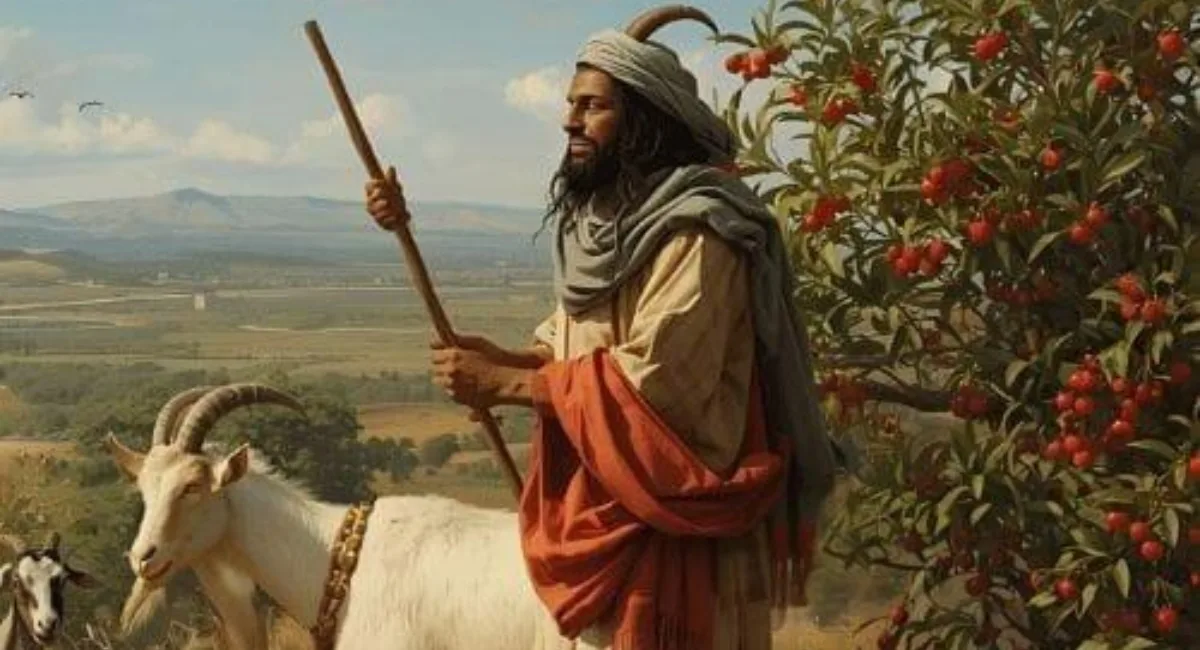
The History of Coffee: From Kaldi’s Dancing Goats to Your Cup
Coffee is more than just a morning beverage. It is a story of discovery, culture, exploration, and craftsmanship that spans over a thousand years. Every cup of coffee carries with it a remarkable journey—from the misty highlands of Ethiopia to bustling cafés across the globe.
Today, coffee is one of the world’s most traded agricultural commodities and is enjoyed by billions of people every day. Yet, its origin begins with a simple legend involving a curious goat herder named Kaldi.
Let’s travel back in time and uncover the fascinating history of coffee.
The Legend of Kaldi: The Beginning of Coffee

The most famous story surrounding the discovery of coffee dates back to around the 9th century in the ancient Ethiopian region of Kaffa, believed to be the birthplace of Arabica coffee.
According to legend, a young goat herder named Kaldi noticed something unusual one evening.
His goats became unusually energetic after eating bright red berries from a wild shrub growing in the forest. Instead of settling down for the night, they danced around playfully and remained active for hours.
Curious about this strange behavior, Kaldi picked some of the berries and took them to a nearby monastery.
Initially, the monks dismissed the berries as something suspicious and threw them into the fire. As the beans roasted, a rich and inviting aroma filled the monastery.
Unable to ignore the wonderful smell, the monks removed the roasted beans from the fire, crushed them, and mixed them with hot water.
The result was the first known cup of coffee.
Whether the legend is entirely true or not remains uncertain, but Kaldi’s story has become an enduring symbol of coffee’s mysterious beginnings.
Ethiopia: The Birthplace of Coffee
Long before coffee became an international beverage, wild coffee plants grew naturally in Ethiopia’s high-altitude forests.
The indigenous communities consumed coffee in various ways:
- Chewing ripe coffee cherries
- Grinding beans into food
- Mixing coffee with animal fat to create energy-rich travel food
- Brewing primitive coffee-like drinks
Even today, Ethiopia remains one of the world’s most respected producers of premium Arabica coffee.
Its famous coffee-growing regions include:
- Yirgacheffe
- Sidamo
- Harrar
- Limu
Each region produces beans with unique floral, fruity, and citrus flavor profiles.
Coffee Travels to Yemen
By the 15th century, coffee crossed the Red Sea into Yemen.
Here, Sufi monks discovered that drinking coffee helped them remain awake during long hours of prayer and meditation.
Unlike Ethiopia, Yemen became the first place where coffee was intentionally cultivated.
The port city of Mocha soon became synonymous with coffee trade.
Interestingly, the word “Mocha” originally referred to coffee exported from Yemen—not chocolate-flavored coffee.
Yemeni traders carefully protected their coffee monopoly by exporting only roasted or boiled beans, preventing other regions from growing coffee plants.
The Rise of Coffee Houses

Coffee soon spread across the Middle East.
By the 16th century, coffee houses had become popular in cities like:
- Mecca
- Cairo
- Damascus
- Constantinople (Istanbul)
These cafés became important gathering places where people discussed:
- Politics
- Literature
- Philosophy
- Business
- Music
They earned the nickname:
“Schools of the Wise.”
Coffee had become much more than a beverage—it became a catalyst for conversation and culture.
Coffee Arrives in Europe
Coffee reached Europe during the 17th century through Venetian merchants.
Initially, many Europeans viewed the dark beverage with suspicion.
Some religious leaders even referred to it as the “Devil’s Drink.”
According to popular historical accounts, Pope Clement VIII tasted coffee before deciding whether it should be banned.
Instead of condemning it, he reportedly enjoyed it and gave it his blessing.
Whether entirely factual or partly legendary, coffee soon spread rapidly throughout Europe.
Coffee houses appeared in:
- London
- Paris
- Vienna
- Amsterdam
These establishments became centers for intellectual discussion, earning names such as:
- Penny Universities (England)
- Literary Cafés (France)
Many famous writers, scientists, merchants, and philosophers exchanged ideas over coffee.
Coffee Crosses the Oceans
European colonial powers soon recognized coffee’s commercial value.
Coffee plants spread to:
- India
- Sri Lanka
- Indonesia
- Java
- Brazil
- Central America
- Caribbean Islands
One fascinating chapter belongs to India.
Baba Budan: Bringing Coffee to India

In the 17th century, an Indian pilgrim named Baba Budan is believed to have secretly carried seven coffee beans from Yemen to India.
At the time, exporting fertile coffee seeds was forbidden.
He reportedly hid the seeds during his journey and planted them in the hills of present-day Karnataka.
Those hills are today known as Baba Budangiri, one of India’s oldest coffee-growing regions.
This small act changed Indian agriculture forever.
Today, India produces world-renowned Arabica and Robusta coffees.
The Coffee Boom in Brazil
During the 18th century, coffee cultivation expanded rapidly in Brazil.
Ideal climate conditions, fertile soil, and vast plantations helped Brazil become the world’s largest coffee producer—a position it continues to hold today.
Brazilian coffee transformed global trade and made coffee accessible to millions.
Coffee Through the Industrial Revolution
As industrialization spread, coffee became the preferred drink of workers, entrepreneurs, and thinkers.
Factories operated longer hours.
Businesses expanded.
Coffee fueled productivity.
Later innovations transformed coffee even further:
- Espresso machines
- Vacuum brewing
- Percolators
- Filter coffee
- Instant coffee
- Specialty coffee
Each innovation introduced new brewing experiences while preserving coffee’s timeless appeal.
The Third Wave Coffee Movement
In recent decades, coffee has evolved into an artisanal experience.
The Third Wave Coffee Movement emphasizes:
- Single-origin beans
- Farm-to-cup traceability
- Sustainable farming
- Precision roasting
- Manual brewing
- Flavor profiling
Coffee is now appreciated much like fine wine.
Consumers increasingly seek:
- Origin
- Altitude
- Processing methods
- Roast profiles
- Brewing techniques
Coffee in India Today
India has become one of the fastest-growing specialty coffee markets.
Regions such as:
- Chikmagalur
- Coorg
- Wayanad
- Araku Valley
- Nilgiris
produce exceptional coffees that compete internationally.
Indian coffee culture has also evolved beyond traditional filter coffee.
Coffee lovers now enjoy brewing methods including:
- V60 Pour Over
- Chemex
- AeroPress
- French Press
- Moka Pot
- Syphon Coffee
- Espresso
Each method highlights different flavor characteristics of the same coffee bean.
Why Coffee Matters Beyond Caffeine
Coffee is not merely about staying awake.
It represents:
- Culture
- Hospitality
- Exploration
- Craftsmanship
- Community
- Conversation
Every cup connects farmers, roasters, brewers, and coffee lovers across continents.
From Kaldi’s curious goats to modern specialty cafés, coffee continues to bring people together.
Experience the Story of Coffee at Erel Spices
At Erel Spices Experience Centre, we believe every cup has a story worth sharing.
Our curated coffee experiences introduce visitors to the fascinating world of specialty coffee through guided brewing sessions featuring methods like V60, AeroPress, Chemex, French Press, Syphon, and Moka Pot. Guests can discover how bean origin, roast level, grind size, and brewing technique influence aroma, body, acidity, and flavor.
Whether you’re a curious traveler or a passionate coffee enthusiast, exploring coffee is about more than tasting—it’s about understanding the remarkable journey that began centuries ago in the forests of Ethiopia and continues in every freshly brewed cup.
Frequently Asked Questions (FAQs)
Who discovered coffee?
According to legend, coffee was discovered by an Ethiopian goat herder named Kaldi, who observed his goats becoming energetic after eating coffee cherries. While the story is symbolic rather than historically verified, Ethiopia is widely recognized as the birthplace of coffee.
Where did coffee originate?
Coffee originated in the highlands of Ethiopia, where wild Arabica coffee plants have grown naturally for centuries.
Who introduced coffee to India?
Coffee is believed to have been introduced to India by Baba Budan, who brought seven fertile coffee beans from Yemen during the 17th century and planted them in Karnataka.
Why is Mocha famous in coffee history?
Mocha is a historic port city in Yemen that became one of the world’s earliest coffee trading centers. The name “Mocha” originally referred to coffee exported from this port.
Why is Kaldi important in coffee history?
Kaldi’s legend symbolizes the discovery of coffee and serves as one of the most enduring stories about how humans first recognized coffee’s stimulating properties.
The history of coffee is a remarkable tale of curiosity, adventure, trade, and innovation. From Kaldi’s legendary discovery in Ethiopia to the flourishing specialty coffee culture of today, coffee has traveled across continents and centuries while retaining its unique ability to connect people.
Every cup tells a story—a story of farmers nurturing coffee plants on misty mountain slopes, skilled roasters unlocking complex flavors, and passionate brewers transforming roasted beans into memorable experiences. Whether you enjoy a traditional South Indian filter coffee or a carefully crafted pour-over, you’re participating in a tradition that has evolved over more than a thousand years.
The next time you hold a warm cup of coffee, remember that you’re tasting a living history—one that began with a simple observation in the Ethiopian highlands and continues to inspire coffee lovers around the world.