
Why Kerala Eats Differently in Karkidakam: The Spice Science Behind Monsoon Wellness
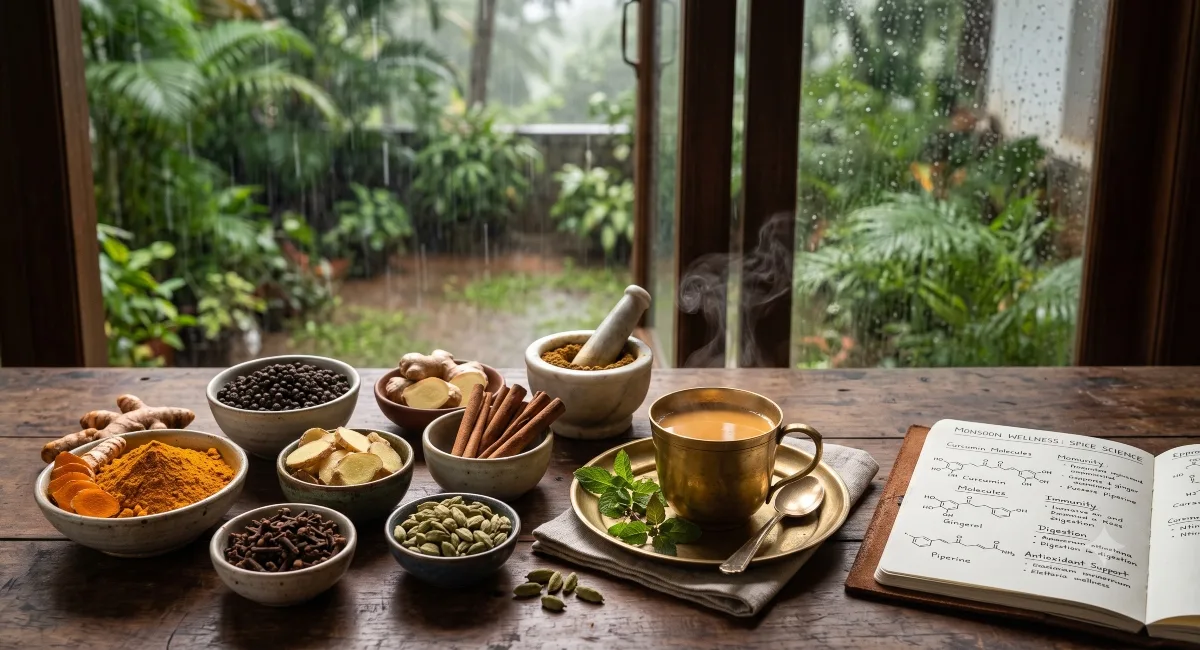
Every year, as the monsoon arrives and the Malayalam month of Karkidakam begins, Kerala kitchens naturally change the way they cook. Everyday spices like black pepper, ajwain, cumin, dry ginger, cardamom, and turmeric become essential ingredients in herbal drinks, medicinal porridges like Karkidaka Kanji, rasam and traditional spice blends
This isn’t simply a seasonal food tradition. It is a practical wellness approach rooted in Ayurveda. For generations, these ayurvedic spices have been chosen to support digestion, provide warmth to the body, and promote overall well-being during the damp monsoon months.
Today, modern nutritional science has identified many of the natural compounds responsible for these benefits, including piperine, thymol, and curcumin, giving scientific context to practices that Kerala households have followed for centuries.
Why Do Digestive Spices Become More Important During the Monsoon?
According to Ayurveda, digestion is governed by Agni, often described as the body’s digestive fire. During the rainy season, increased humidity and cooler temperatures are believed to weaken Agni, resulting in a condition known as Mandagni, or sluggish digestion.
Common symptoms may include:
- Bloating
- Reduced appetite
- Indigestion
- Heaviness after meals
- General fatigue
Instead of relying solely on medicines, traditional Kerala cooking responds by increasing the use of digestive spices known as Deepana (appetite stimulants) and Pachana (digestive aids). These carefully selected spices not only enhance flavour but also help support healthy digestion naturally.
The effectiveness of these spices depends greatly on their freshness, essential oil content, and quality, making whole spices from Kerala a preferred choice for both traditional cooking and wellness recipes.
The Best Ayurvedic Spices for Digestion During Karkidakam
Black Pepper
Few spices have been studied as extensively as black pepper. Its active compound, piperine, is known to support digestive enzyme activity and improve the absorption of certain nutrients. Among the many black pepper benefits, Ayurveda values pepper for its warming nature, making it particularly useful during cold and damp weather. Premium Idukki black pepper, grown in high-altitude plantations under natural shade, is especially prized for its rich aroma, bold flavour, and naturally high essential oil content.
Ajwain (Carom Seeds)
When discussing the benefits of ajwain, digestive support is always at the top of the list.
Ajwain contains thymol, a naturally occurring compound recognised for its carminative properties that help reduce gas and bloating. This explains why it appears in traditional remedies, postpartum recipes, digestive powders, and monsoon herbal preparations. Fresh, whole ajwain releases a strong herbal aroma when lightly crushed; a simple indicator of quality that is often missing in older, poorly stored spices.
Cumin
Unlike stronger spices such as pepper or dry ginger, cumin provides gentle daily digestive support. Known for stimulating digestive enzymes, cumin for digestion has been valued in Ayurveda for centuries. It is one of the few spices suitable for everyday cooking, making it a staple ingredient in curries, rasam, rice dishes, buttermilk, and spice blends. Fresh whole cumin retains its natural oils far better than pre-ground versions, producing richer flavour and greater aroma.
Dry Ginger
While fresh ginger is widely used throughout the year, dry ginger/ chukku becomes especially important during Kerala’s monsoon season. Drying concentrates many of ginger’s warming properties, making it an essential ingredient in Chukku Kappi, herbal decoctions, and traditional digestive recipes. For those searching for dry ginger remedies, it remains one of Ayurveda’s most trusted spices for supporting digestion and providing comforting warmth during rainy weather.
Cardamom
Cardamom is often associated with desserts and tea, but its role in Ayurveda extends much further. Among the many cardamom benefits, its ability to balance stronger warming spices like pepper and ginger makes it an important ingredient in digestive spice blends. The finest green cardamom comes from Kerala’s high-altitude plantations, particularly in the Western Ghats. Slow-growing conditions allow the pods to develop higher concentrations of aromatic oils, resulting in exceptional flavour and fragrance.
Turmeric
Turmeric has earned worldwide recognition because of curcumin, the natural compound responsible for many of its well-known antioxidant and anti-inflammatory properties. Interestingly, curcumin is not easily absorbed on its own. When paired with black pepper, however, piperine significantly improves curcumin absorption. Long before modern research confirmed this relationship, traditional Kerala recipes had already combined turmeric and pepper in everyday cooking, demonstrating the practical wisdom behind Ayurvedic food traditions.
Why Spice Quality Matters as Much as the Recipe
The health-supporting compounds found in spices are naturally influenced by how and where they are grown.
Several factors affect the quality of whole spices from Kerala:
High-altitude cultivation: Cool Mountain climates, such as those found in Idukki, encourage slower maturation and greater development of essential oils in pepper, cardamom, and other premium spices.
Shade-grown farming Many Kerala spices are traditionally grown beneath forest canopies. This slower growth often contributes to more complex flavour profiles and richer aromas.
Fresh harvesting and careful storage Essential oils gradually decline when spices are exposed to heat, sunlight, moisture, or prolonged storage. Freshly harvested whole spices retain significantly more aroma, flavour, and natural compounds.
Minimal processing: Whole spices preserve their volatile oils far better than pre-ground alternatives. Grinding only when needed helps retain both flavour and functional properties.
Bringing Kerala’s Spice Tradition into Your Kitchen
Kerala’s monsoon food traditions remind us that spices have always served a purpose beyond taste. Every ingredient from black pepper and cumin to ajwain, dry ginger, cardamom, and turmeric play a functional role in supporting digestion and seasonal wellness. Choosing fresh, carefully sourced whole spices from Kerala, ensures you enjoy the fullest flavour, aroma, and natural character that these remarkable ingredients have to offer.