
Why Your Cashews Go Stale? How to Store Dry Fruits the Right Way?
You open the jar expecting that rich, buttery crunch. Instead, the cashews taste faintly bitter, a little soft, almost sour. Nothing looks wrong with them. So what happened? It’s not bad luck, and it’s not the brand. It’s almost always storage. Dry fruits are packed with natural oils that make them delicious and nutritious and those same oils are exactly what turns them stale, soft, or bitter when they’re kept the wrong way.
Here’s the science behind why it happens, and the simple habits that keep cashews, almonds, and raisins fresh for months instead of weeks.
The Real Reason Cashews (and Other Dry Fruits) Go Stale
Staleness isn’t random; it’s chemistry. Three things quietly work against your dry fruits every day they sit on the shelf
Oxidation: Cashews have one of the highest fat contents of any nut. The moment that oil is exposed to air, it starts breaking down. This produces the sharp, bitter, “off” taste people mistake for spoilage.
Moisture: Humidity softens texture and creates the perfect environment for mould, which is especially risky with cashews since they don’t have a protective skin like almonds do.
Heat and light: Warmth speeds up oxidation dramatically, and sunlight breaks down oils even faster which is why that jar on the kitchen counter goes stale quicker than one tucked in a cupboard.
Once you understand these three triggers, storing dry fruits correctly becomes a lot more intuitive. It’s really just about keeping air, moisture, and heat away from the nut.
How to Store Cashews So They Stay Fresh
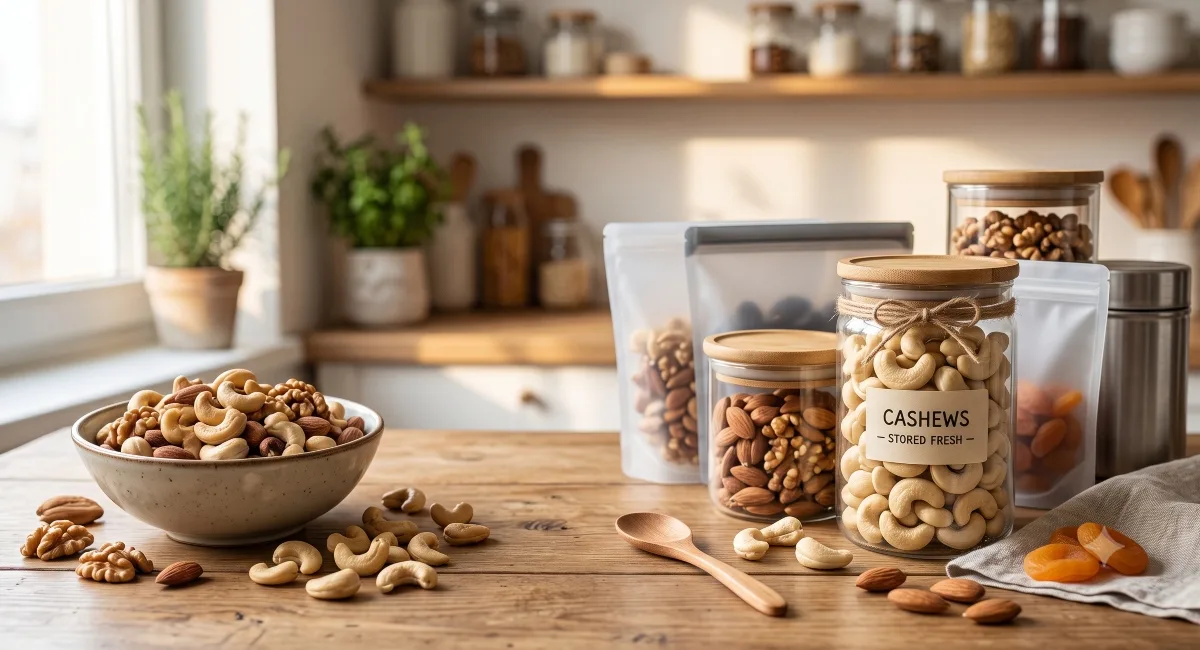
Cashews are the most delicate of the three, so they deserve the most care. Seal them airtight, always. Move cashews out of their original pouch and into a glass jar or BPA-free airtight box the moment you open the pack.
Cool and dark beats room temperature. A cabinet away from the stove works for short-term use (2–3 weeks), but don’t leave cashews out on the counter for longer than that. Refrigerate for real freshness. In the fridge, cashews last up to 6 months; frozen, they’ll keep for close to a year without losing their crunch.
Trust your nose. A sharp, paint-like smell or a soft, shrivelled texture means the oils have already turned and that batch won’t taste right again, no matter how it’s stored from here.
How to Store Almonds So They Stay Fresh
Almonds have a natural advantage. Their skin acts as a protective barrier, which is why they last longer than cashews on average. In an airtight jar in a cool pantry, they stay fresh for up to a month.
Once the skin is removed, the exposed surface oxidises faster. Refrigerate these varieties rather than leaving them in the pantry.
Refrigerated almonds last 6–9 months; frozen almonds can last up to a year.
Almonds absorb odours easily, so store them away from onions, spices, or coffee.
How to Store Raisins So They Stay Soft and Fresh
- Raisins face a different enemy than nuts do. It’s less about oxidation and more about moisture loss and sugar crystallisation.
- Airtight is non-negotiable. A loosely closed bag lets moisture escape, turning raisins hard and chewy within weeks.
- Room temperature works for daily use. Sealed properly, raisins stay soft for 4–6 months in a cool pantry.
- Refrigeration extends shelf life further. In the fridge, raisins can easily last up to a year.
- Hardened raisins aren’t ruined. Soak them in warm water for 10 minutes to plump them back up before eating or cooking with them.
5 Habits That Keep Any Dry Fruit Fresh for Longer
- Cool completely before sealing. warm nuts trapped in a container create condensation, which invites mould almost overnight.
- Buy only what you’ll use in 2–3 months, unless you’re refrigerating or freezing in bulk.
- Label containers with the purchase date so older stock always gets used first.
- Store raw and roasted/salted varieties separately. Added salt and oil in roasted nuts shortens their shelf life.
- Smell before you eat, not just check the date. Rancid oil has an unmistakable sharp, bitter smell that the expiry date won’t always catch in time.
The Storage Trick No One Tells You
Here’s what most guides leave out. No container can fix dry fruits that weren’t fresh to begin with. Mass-produced packets with long shelf lives often sit in warehouses for months before they even reach a store shelf, which means the “staleness clock” has already been ticking before you bring them home.
That’s the real advantage of buying from a small-batch supplier instead of a mass-market brand. At Erel Spices, our cashews, almonds, and raisins are sourced in small batches and packed close to the point of purchase. So when they reach your kitchen, they aren’t half ruined.
Frequently Asked Questions
- Why do my cashews taste bitter even though the packet hasn’t expired?
Bitterness is the clearest sign of rancid oil, caused by exposure to air, heat, or light. Once oils turn, the taste doesn’t reverse, so it’s best to discard that batch and switch to airtight, refrigerated storage.
- Do dry fruits need to be refrigerated?
Not always. For use within 2–4 weeks, a cool, dark pantry in an airtight container is enough. Beyond a month, refrigeration meaningfully slows down staleness and rancidity.
- Can I freeze cashews and almonds?
Yes. Both freeze well for up to a year in airtight, freezer-safe bags with the air pressed out. Let them return to room temperature before eating for the best texture.
- How long do raisins last once opened?
Once opened and transferred to an airtight jar, raisins stay soft and fresh for 4–6 months in a cool pantry, or up to a year if refrigerated.
[Why cashews go stale, how to store dry fruits, store cashews at home, how to store almonds, store raisins fresh]